
Regarding Lineage, Dharma Transmission, and Zen Masters
What is an authentic Dharma Transmission in Zen, and what makes someone a legitimate teacher?
I saw a discussion somewhere about [modern and local] so-called Zen masters, their Dharma transmissions, lineages, their authenticity, and the role of Sōtō-shū, the institution representing the Soto school in Japan.
I think some of these things are misunderstood. Let me briefly try to clarify some things.
What is Sōtō-shū?
Muho, the former abbot of Antaiji, calls it “a complex organization with a fixed structure and a huge bureaucratic apparatus.” It is basically the church of Soto Zen in Japan. The religious corporation Sotoshu (宗教法人 曹洞宗), which designates the Sōtō-shū Shumucho (曹洞宗宗務庁) as its central administrative headquarters in Tokyo, was officially established under Japan’s post-war Religious Corporations Law in 1952. Historically, its organizational predecessor, the Sotoshu Shumuin (曹洞宗宗務院), dates back to earlier modernization efforts in the late 19th century.
Sōtō-shū is a corporation with a head and a parliament consisting of 72 priests who are elected in 36 districts across Japan, with 2 from each district. The umbrella organization Sōtō-shū represents affiliated temples and organizations and has its own governing documents: the Constitution, the Regulations for the Religious Juridical Person Sōtō-shū, and the Procedures.
No need to go into further details about this. The point is that the Sōtō-shū organization is not something that was founded by Dōgen Zenji, or inherited from China, and isn’t Sōtō Zen itself. It is a corporation representing about 15000 temples in Japan, and a couple hundred more outside the country.
Contemporary Sōtō-shu has four kinds of temples, defined by their activity. There are the head temples, Eihei-ji, founded by Dogen Zenji, and Soji-ji, founded by Keizan Zenji; the kakuchi, or teaching monasteries, where yearly ango (90-day retreats) are held; dharma temples; and regular temples (I have zero clue what the difference between the last two is).
Anyway, Sōtō-shū in Japan handles the training and recognition of all affiliated priests. Kojun Kishigami, a Soto Zen priest in the lineage of Sawaki Roshi, makes the following observations about the training of monks in Japan:
Every year, about 150 novices arrive. About 90 percent of them are sons of temple heads, which leaves only 10 percent who chose this path for themselves. For the autumn session, about 250 monks come together. Essentially, what they are learning in these temples is the ability to officiate all kinds of ceremonies and rites practiced by the Sōtō School – the methods for fulfilling their role. Apart from this aspect, practicing with the idea of developing one’s own spirituality is not prevalent.
Sōtō-shū has a clearly defined ranking system that defines one’s position from ordination to the status of abbot at one of the head temples. However, it is important to understand that this system has nothing to do with what Dōgen Zenji established when he created Eiheiji, nor is it an integral part of the so-called uninterrupted transmission of the Dharma from Shakyamuni. With the expansion of Sōtō Zen to the West, it became increasingly complicated for Western priests to be connected with the Sōtō-shū, become registered with them, trained by them, and thus be recognized by them.
Regarding Dharma Transmission
Dharma transmission has been a part of the Chan/Zen lineage for a long time, well before the legal establishment of the Sōtō-shū. It was understood as an intimate transmission from teacher to student, and it depended entirely on the two of them. It is the teacher recognizing that his student “got it,” that he has, in a way, gained the Way, that he can both embody the Dharma and correctly teach it to others, becoming an extension of the “veins” of the Buddha, through which the blood of Dharma flows. It is so much of an intimate thing that, according to legend, Huineng’s Dharma Transmission happened in secret, in the dead of night, and there was no need for a public statement regarding his new status as Patriarch. All he needed was his robe and bowl, given to him by the previous patriarch.
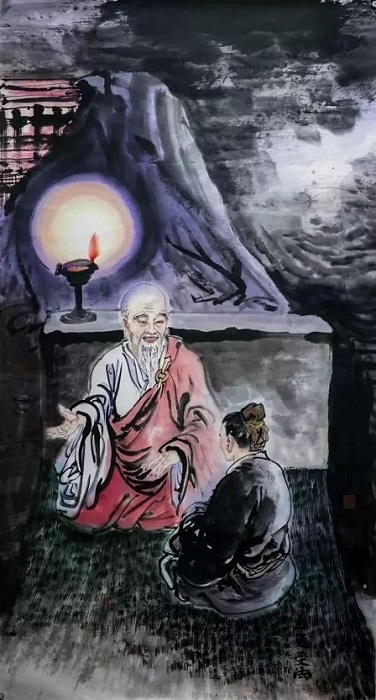
The procedure of Dharma Transmission itself is very intimate, done at night, with only the Teacher and Student present. The only proof of the Transmission is the Shisho itself, the cloth that contains the list of ancestors, written by hand by the recipient, blood mixed in with the ink, which, from then on, includes their name as part of this unbroken line of Dharma heirs of Shakyamuni Buddha. The Shisho has the official seals (stamps, the signature, basically) of the Teacher. The Teacher’s shiho contains those of their Teacher, and so on. Some more materials are given to the Student during this procedure.
The recognition of this procedure within the Sōtō-shū corporation is a different matter. For priests whose ordination was officially registered with Sōtō-shū, at the request of the Teacher, expensive empty papers are sent from the Sōtō headquarters, which used to cost somewhere around 100 Euros (at least that’s what they cost some years ago… I have no idea about it these days). The students get a year to finish writing the documents, or else they “expire,” and new ones need to be ordered (and paid for).
After the Transmission is completed and registered with Sōtō-shū, one is not yet considered a teacher, an osho, roshi, or master, or whatever other titles there might be. There are many more steps to be taken, ranks to be climbed, a changing of the colors of the robes to be realized, more money to be paid for, a night spent at Eiheiji or Sojiji as “abbot,” and other procedures.
Boy, this is getting long… Can you also notice the difference between transmission as offered to Huineng or Dogen Zenji and this institutional version? It took Dogen Zenji around two years to receive Dharma Transmission from venerable Rujing, and immediately after, he returned to Japan, where he continued his activity as a full-fledged Patriarch of the lineage.
Anyway, to cut a long story short.. Just because one’s Dharma Transmission is not registered with Soto Shu doesn’t mean it’s illegitimate or fake or meaningless. There are many Western places that do not officially affiliate with Soto Shu. According to the official registers of the Soto Shu Shumucho, there are roughly 50 to 60 recognized temples and centers in North America and roughly 45 in Europe that maintain formal, legal affiliation. In contrast, there are hundreds of different groups, Zen centers, small Dojos and Zendos operating around the world. Of course, there are way more links between these and Sōtō-shū, thanks to the priests leading these places and their individual affiliation with or recognition by the Sōtō-shū in Japan.
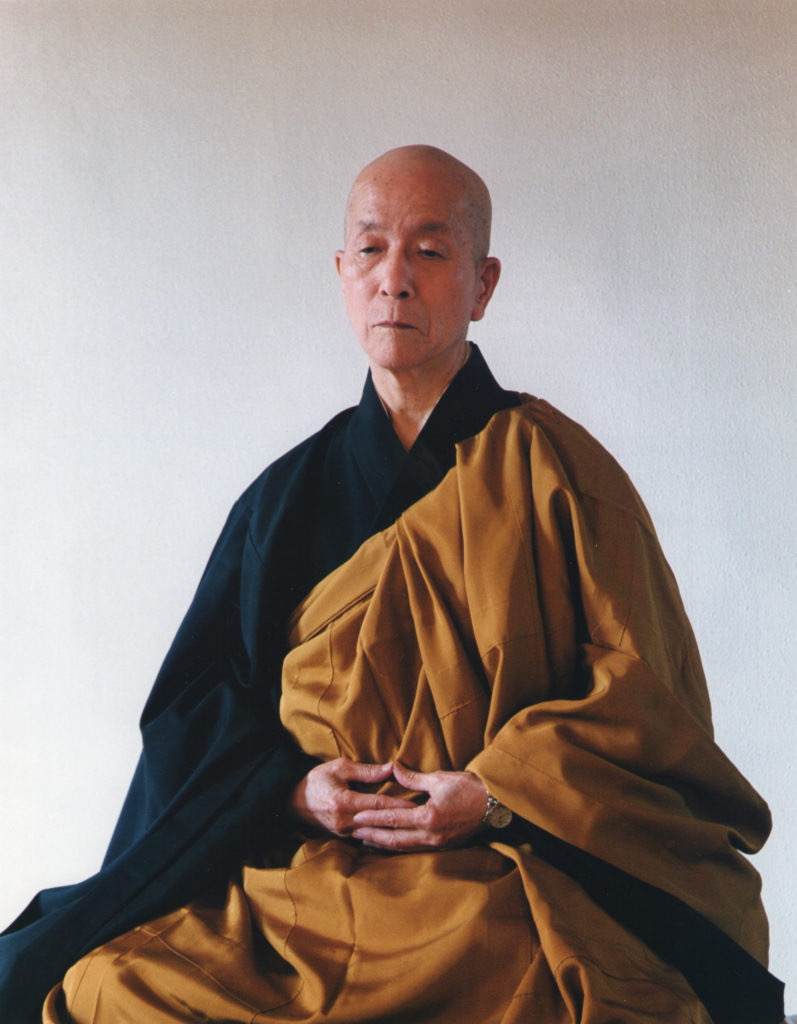
Not being affiliated with Sōtō-shū does not invalidate one’s ordination or transmission; it just means they operate outside of this establishment. My own teacher’s ordination was under Nishijima Roshi, who was fully registered with Sōtō-shū in Japan. His ordination teacher was the abbot of Eiheiji, for goodness sake.
Nishijima Roshi, however, was not too enthusiastic about the Sōtō-shū in Japan, which he described as basically a glorified funeral service company, so he did his best to follow the example of Dogen Zenji and not pay too much attention to anything else. As a matter of fact, he encouraged his Western Dharma heirs to stay away from the Sōtō-shū, return to their home countries, and simply practice and teach the true Dharma, as received from Shakyamuni Buddha, through Bodhidharma, Nagarjuna, and Dogen Zenji (which were probably the links he mentioned most often).
I saw folks online doubt the authenticity of the Dharma transmissions given by Nishijima Roshi because they were not registered with Sōtō-shū. Baloney!
Another important thing is that Dharma Transmission can not be revoked or returned! What a foolish idea! Yes, some folks have attempted to do so, or claimed to have done so, because their Dharma heirs had committed heinous acts, or because they had had a falling out, or because they thought they had made a mistake. Regardless of the reasons, such a thing is nonsense.
On Zen Masters
Dharma Transmission within Sōtō-shū doesn’t make anyone a Zen master. As I mentioned before, it doesn’t even make them a teacher. Zen Master, or zenji, within the Sōtō-shū is a title reserved for the abbots of Eiheiji and Sojiji, so usually, according to the Sōtō-shū, there are only two Zen masters alive, unless there is a retired zenji still living.
I won’t even attempt to define the concept of a Zen master outside of the confines of the Sōtō-shū.
There are other titles that come from the establishment in Japan, which many have heard of, like Osho or roshi. Osho is a title officially recognized and given to someone affiliated with Sōtō-shū, after they complete three previous steps, which are transmission, ten-e (the changing of the color of the robe), and zuise, which means spending one night as “abbot” at one of the two head temples. It has to happen within two years after the ten-e procedure was started. All very bureaucratic, isn’t it?
Roshi is not a formal title, so it can’t be obtained, except by becoming old, which is what it means: old master. The saying is that if one succeeds in getting others to call them a roshi, without calling themself a roshi, they are a roshi.
So, there.. that’s all there is about this. Dharma transmission is merely an authorized teacher (one who has received Dharma Transmission) acknowledging and affirming the ability of one of their students to carry on the lineage tradition. In a great article about Dharma Transmission, Domyo Burk says:
Attempts to standardize Dharma Transmission in China and Japan have met with some success, but in the West, the variation in this ritual tradition of teacher authorization is even greater. Zen in the West – at least at this point, and particularly in North America – is relatively new and more or less without any overarching institutional governing structure.
So, every person who has received Dharma Transmission can pretty much do with it as they please. If I met someone tomorrow who had never practiced Zen but I thought they were really cool and “Zen” anyway, I could transmit them within the week. My fellow Soto Zen teachers would probably raise eyebrows and lose some respect for me, but they really couldn’t do anything about it.
Asking the Sōtō-shū headquarters in France, Los Angeles, or Tokyo about the legitimacy of a particular person who claims to have transmission or be a teacher is kind of useless, unless you are specifically interested in who the Japanese establishment recognizes, which is most definitely not everyone who has actually received ordination or transmission. You could ask that particular teacher about their lineage; you could ask them about their own shisho (whether they show it to you or not is a very different thing, and also, how could you possibly know whether the seals are authentic or not?), or you could look into their lineage. It is up to you.
However, it’s probably easier to just pay attention to who a person is, how they practice, how they carry themselves, what they teach, and go from there. Rigidity is not the way of the Buddha, friends.
My own ordination and transmission are something I have always regarded as an affair between my teacher, Jundo Roshi, and myself. I have never cared too much about any recognition from anyone, as I find it silly, and I have certainly not had any interest in the Japanese establishment. Of course, there is a sangha of real humans that has been a witness to the entire process, but even that is irrelevant.
To me, it is part of something greater, something more intimate and fragile. Something that can’t be grasped. How could anyone validate my commitment to the Dharma, or judge the ordination vows taken with my heart? How could anyone understand the lived experience of the practice with my teacher, in whatever form that happened? How could anyone determine my teacher’s mind and his reasons for accepting my ordination vows or deciding to transmit the Dharma to me? I can’t convince anyone of it, cause it’s like trying to hold on to dust or water.


